
Brick walls don't fail suddenly - they give warning. The cracks, staining, displacement, and surface deterioration that appear on a brick structure over time are a communication system, and learning to read it correctly is the difference between addressing a manageable repair and discovering a structural problem that's been developing unobserved for years. Here's what to look for and what each warning sign is telling you.
Why Structural Damage in Brickwork Matters
A brick wall performs as a system - stable foundation, sound mortar joints, and intact brick units working together to carry load, resist lateral pressure, and keep water out of the structure behind it. When any part of that system is compromised, the others are affected. Cracked mortar admits water that drives freeze-thaw damage to the brick. Deteriorated brick units reduce the wall's load-carrying capacity and expose the mortar around them to accelerated erosion. Foundation movement that cracks the wall opens pathways for moisture that compound the original structural damage. Catching the early indicators - before the system has degraded significantly - is what keeps the repair scope proportionate to the actual problem.
Photo's From Our Gallery
Here are the common visual signs of structural damage you'll find in brickwork.
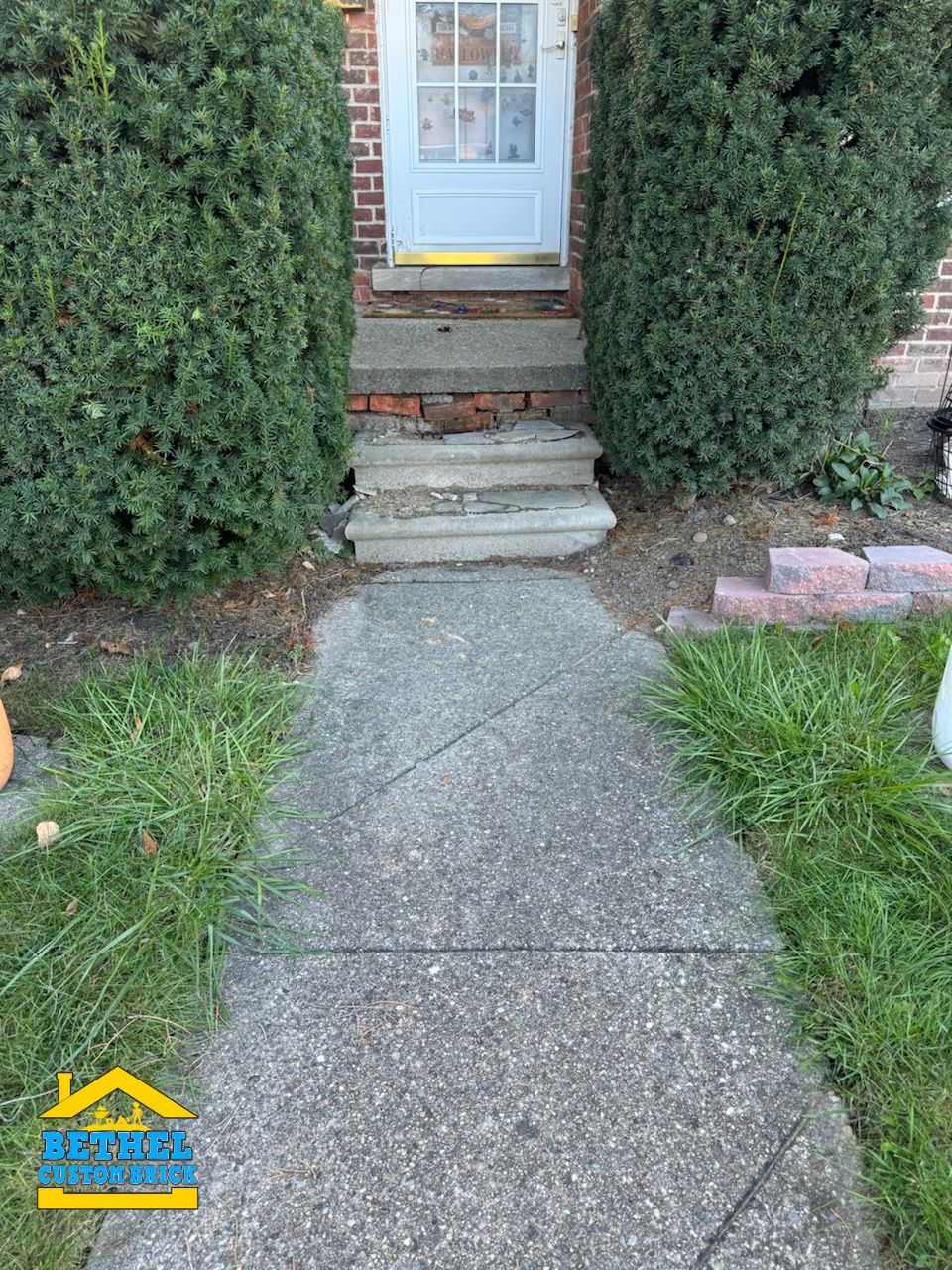
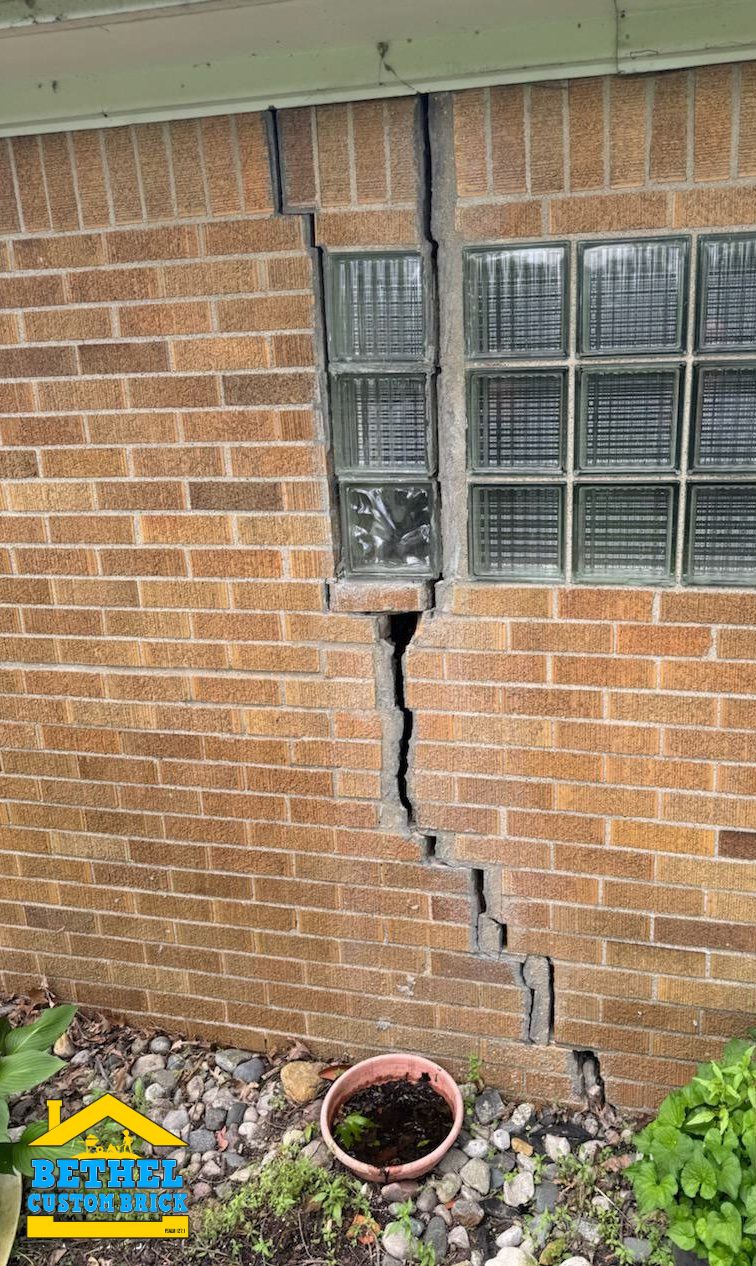
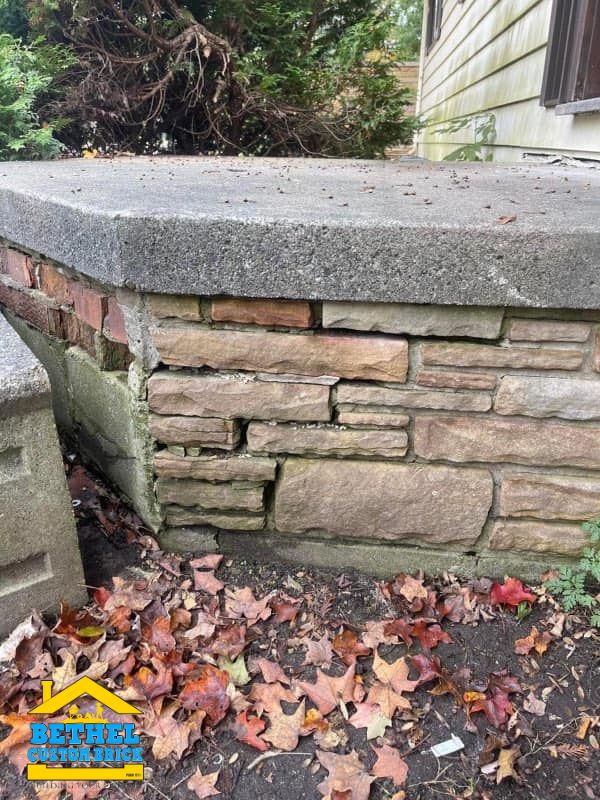
1. Cracks in the Brickwork
What to look for:
Crack pattern is diagnostic - different patterns indicate different underlying causes, and getting the cause right is essential to a repair that holds.
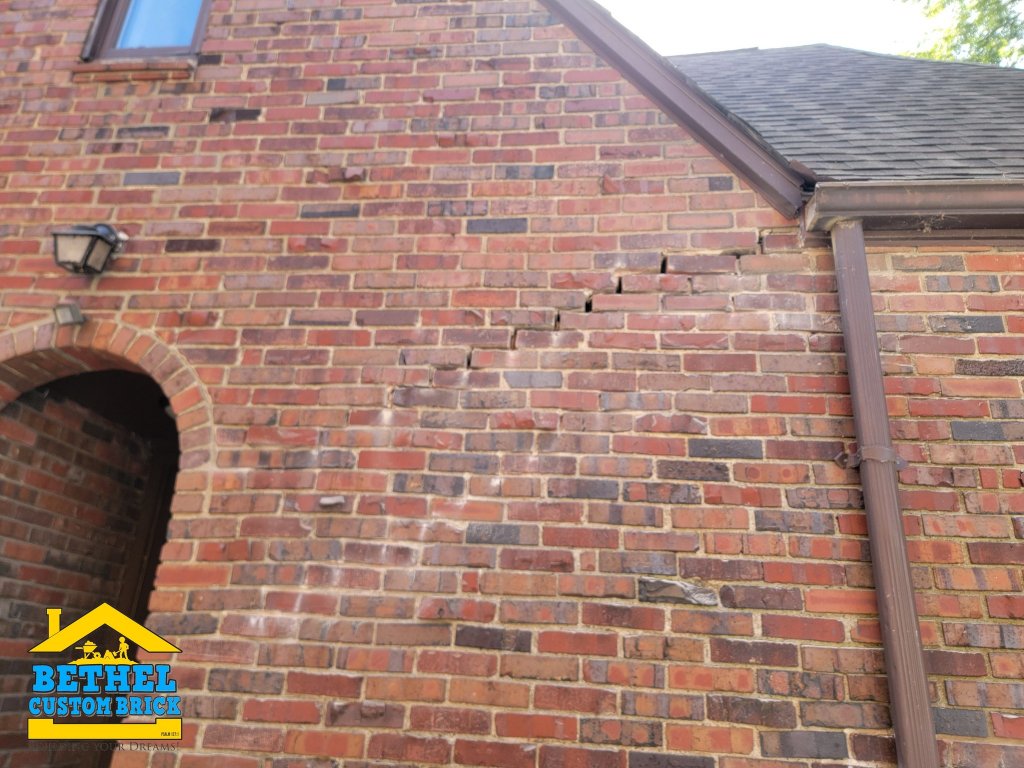
- Stair-step cracks that follow the mortar joints in a diagonal pattern are the most common crack type in brick masonry and typically indicate differential foundation movement - one section of the foundation settling relative to an adjacent section, with the wall above expressing that movement through the mortar joints.
- Vertical cracks running through the mortar joints or through brick units can indicate foundation settlement, thermal expansion and contraction stress, or shrinkage in the supporting structure.
- Horizontal cracks - particularly in basement or retaining walls - are the most structurally serious crack type, typically indicating lateral earth or water pressure on the wall that the masonry is struggling to resist.
What to do:
Small, stable cracks with no evidence of ongoing movement can be monitored and repointed when they're not widening. Cracks that are large, widening over time, or appearing in patterns that suggest foundation movement require professional assessment before any repair work begins - repointing a crack that's still moving produces a repair that reopens on the same timeline as the original.
2. Bulging or Bowing Walls
What to look for:
A wall section that has displaced outward from its original plane - visible as a convex bulge when viewed from the side, or as a deviation from the surrounding wall face when viewed straight on. Bowing is caused by pressure acting on the wall from behind: water accumulation, inadequate lateral support, deteriorated wall ties in cavity wall construction, or foundation movement that's pushing the wall out of alignment.
What to do:
Bowing walls don't stabilize on their own - the forces driving the displacement continue acting on the wall until either the cause is corrected or the wall fails. This is a call-a-professional-today situation rather than a monitor-and-address-later one. The assessment needs to establish both the extent of the displacement and what's driving it, because the repair approach depends entirely on the cause.
3. Loose or Shifting Bricks
What to look for:
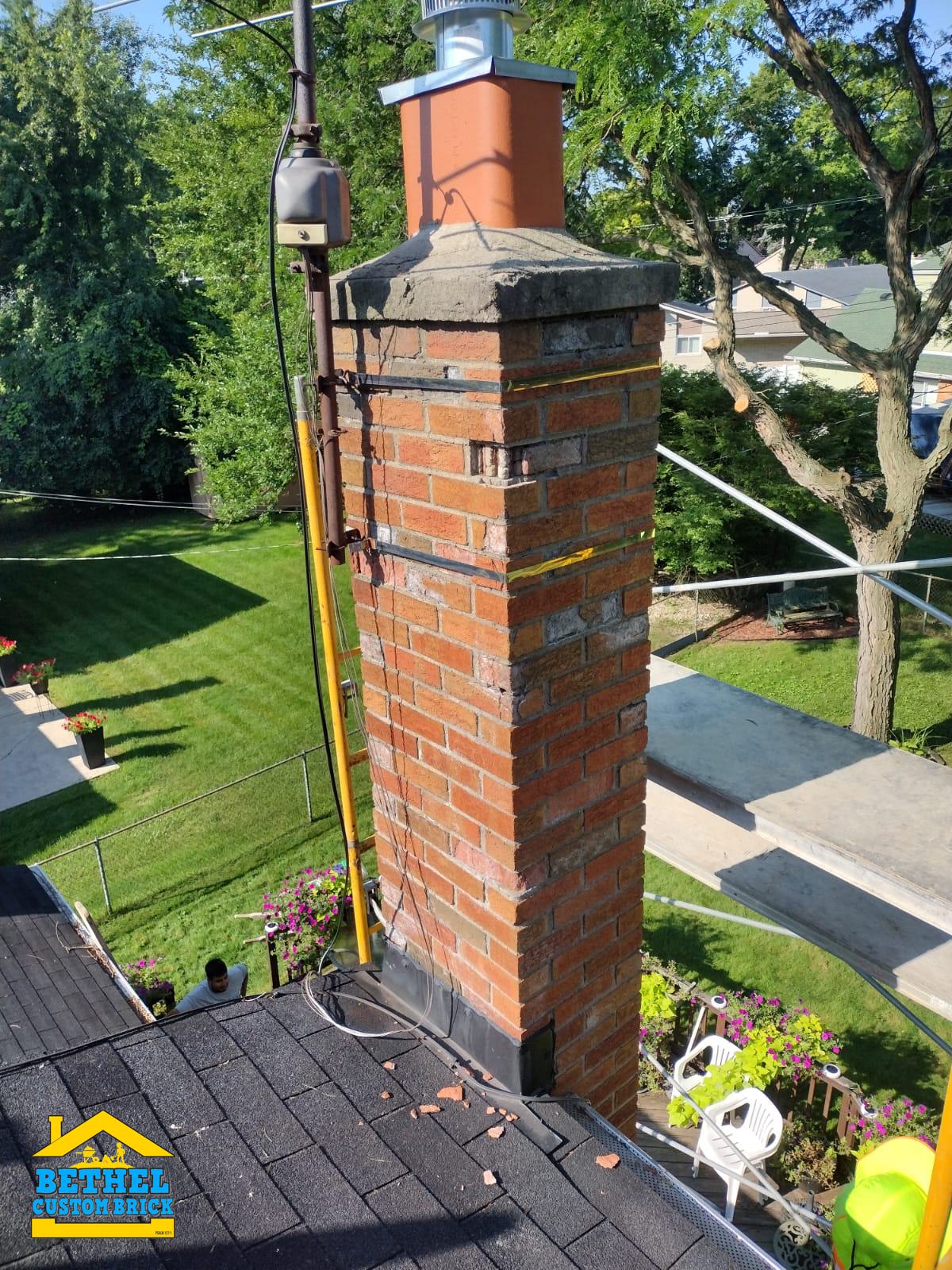
Individual bricks that move when pressed, or brick courses that have visibly shifted from their original position. Mortar deterioration is the most common cause - joints that have eroded through their full depth no longer hold the adjacent units in place. Water damage that has compromised the mortar bond, or foundation instability that has introduced movement into the wall, can also produce loose units.
What to do:
Isolated loose bricks with sound surrounding mortar are typically a localized repointing and re-setting issue. Widespread looseness across a wall section indicates either extensive mortar deterioration requiring systematic repointing, or a structural condition - foundation instability, wall tie failure - that needs professional assessment to define the correct repair scope.
4. Gaps Between Bricks and Windows or Doors
What to look for:
Visible separation between the brickwork and the frames of windows or doors - gaps that weren't present when the building was constructed and have opened over time. Window and door frames are fixed points in the wall assembly; gaps that open between them and the surrounding masonry indicate that the masonry is moving relative to those fixed points. Foundation settlement is the most common driver.
What to do:
Caulking the gap is a temporary waterproofing measure, not a structural repair - it addresses the symptom while the cause continues to develop. Gaps around windows and doors warrant professional evaluation to establish whether the foundation movement that caused them has stabilized or is ongoing, because that determination drives everything about the appropriate repair response.
5. Deteriorating Mortar (Crumbling or Eroded Mortar Joints)
What to look for:
Mortar that has eroded below the face of the surrounding brick, crumbled within the joint, or separated from the adjacent brick units. Joint deterioration that's limited to the surface is early-stage. Joints that have eroded to significant depth - particularly those that are open enough to admit fingers when probed - represent a more advanced condition that has been affecting the wall's structural and waterproofing performance for some time.
What to do:
Repointing - removing deteriorated mortar to sound depth and replacing it with properly specified new mortar - restores joint function when the surrounding brick units are intact. Mortar deterioration caught early is a straightforward maintenance task. Allowed to progress, it becomes a more extensive repair and opens the moisture infiltration pathways that drive secondary damage to the brick.
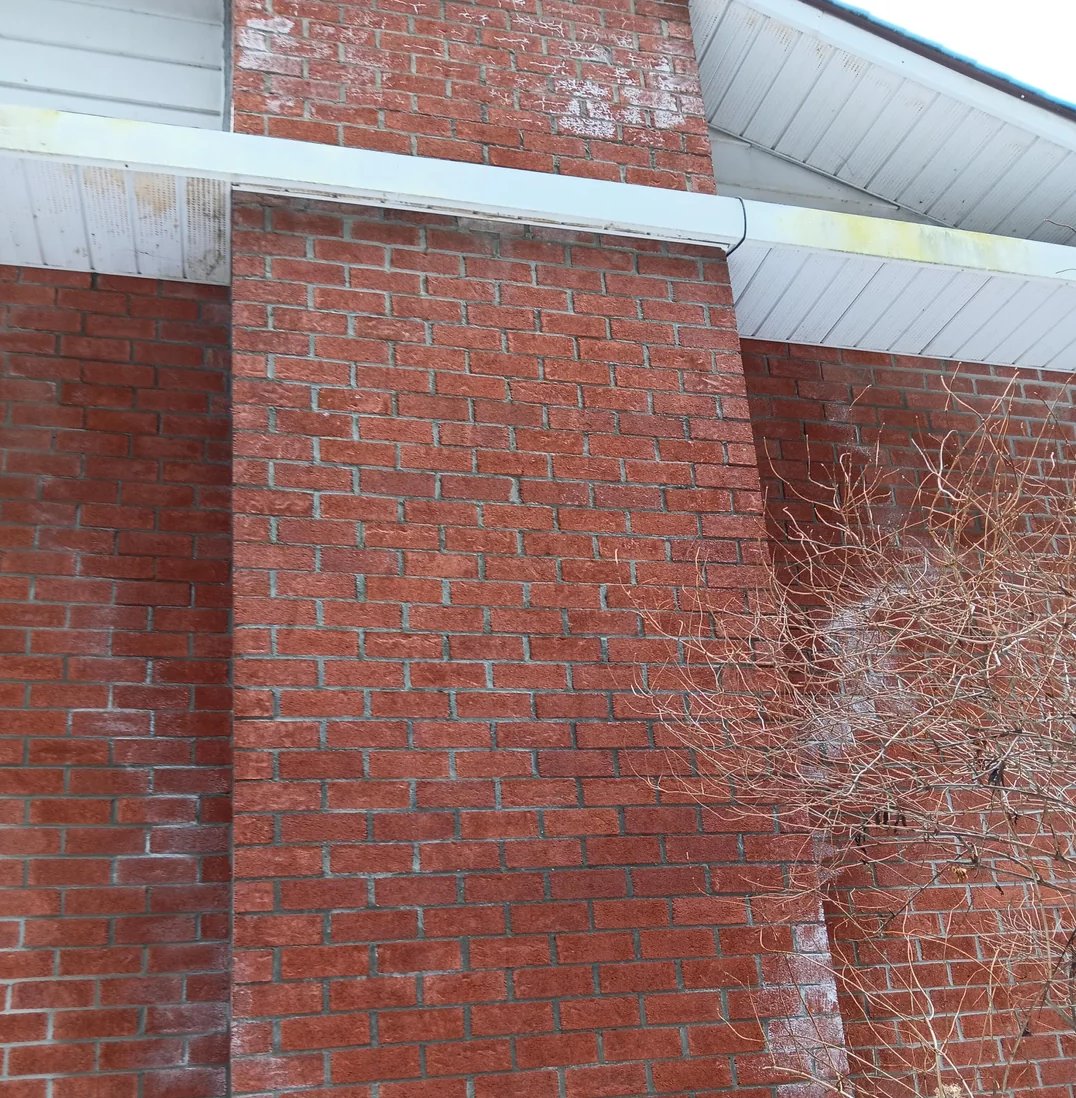
6. Efflorescence (White Powder on the Brick Surface)
What to look for:
White or off-white powdery deposits on the brick surface, typically appearing in patches or streaks that correspond to areas of moisture movement within the wall. Efflorescence is dissolved mineral salts carried to the surface by water moving through the masonry - the deposits are what's left when that water evaporates at the face.
What to do:
Efflorescence itself can be removed with a stiff brush and water wash. The more important response is tracing the moisture source that's producing it - faulty gutters or downspouts discharging water against the wall, failed flashing at roof-wall intersections, deteriorated mortar joints, or inadequate site drainage. Efflorescence that recurs after cleaning is telling you the moisture source hasn't been addressed.
7. Discoloration or Staining on Brickwork
What to look for:
Dark streaking or staining that follows water runoff patterns, green or black biological growth on the brick surface, or broad discoloration that differs from the surrounding brick. Dark streaks typically indicate sustained water runoff from an overflowing gutter or failed flashing. Green or black growth indicates sustained moisture at the surface. Broad discoloration can indicate water absorption patterns that reveal where the wall is taking on more moisture than surrounding areas.
What to do:
Surface cleaning addresses the visible staining, but the drainage or flashing issue producing it needs correction to prevent recurrence. A breathable water-repellent sealant applied after cleaning and after the moisture source is addressed reduces future absorption and makes subsequent cleaning easier.
8. Sagging or Misaligned Bricks
What to look for:
Brick courses that have dropped below their original horizontal alignment, or individual units that have rotated or displaced from their set position. Sagging indicates that the support condition beneath those courses has changed - lintel failure above an opening, mortar deterioration extensive enough to allow brick weight to drive settlement, or foundation movement that has introduced differential displacement into the wall.
What to do:
Sagging and misalignment are structural indicators that warrant professional assessment. The visible displacement is the surface expression of a condition in the wall or foundation that needs to be identified and addressed - realigning bricks without understanding and correcting the cause produces a repair that fails again.
9. Cracks or Damage in Interior Walls
What to look for:
Cracks in interior drywall or plaster - particularly diagonal cracks running from the corners of window and door openings, or cracks that mirror the stair-step pattern of exterior brick cracking. Interior cracks that appear in conjunction with exterior masonry damage are significant because they indicate that whatever movement is affecting the exterior wall has progressed far enough to express in the interior finish as well.
What to do:
Interior cracks alongside exterior brick damage are a combined indicator that warrants structural assessment rather than cosmetic repair on either surface. The two together suggest foundation movement or structural loading conditions that need to be properly evaluated before repair work on either the exterior masonry or interior finishes will be durable.
Why Regular Inspections Matter
The most consistent finding in masonry damage assessment is that the visible condition understates how long the deterioration has been developing. Cracks that appear sudden have typically been opening slowly for seasons. Mortar that looks surface-eroded is often more deeply deteriorated within the joint. Efflorescence that shows up in spring reflects moisture conditions that were present all winter. Regular inspection - specifically in early spring after freeze-thaw season has run its course - catches the season's accumulated damage at the stage where it's still contained and inexpensive to address. For older homes and properties with previous repair history, annual professional inspection is the baseline standard.
When to Call a Professional
Some conditions can be monitored and addressed on a normal maintenance schedule. Others need professional attention without delay. The list that warrants immediate contact: large or widening cracks, bowing or bulging wall sections, gaps opening around windows or doors, widespread loose bricks or extensively deteriorated mortar, and any indication of foundation settlement. These conditions don't improve on their own, and the cost of addressing them increases with the time elapsed between first appearance and first intervention.
- Large, widening cracks in the brickwork
- Bowing or bulging walls
- Gaps around doors and windows
- Loose bricks or crumbling mortar
- Signs of foundation settlement
A professional mason or structural engineer can assess the extent of the damage, determine the underlying cause, and recommend an effective solution to prevent further issues.
Final Thoughts
Recognizing the warning signs of structural damage in brickwork - stair-step cracking, bowing walls, widening mortar joints, shifting brick courses, efflorescence, and interior wall cracks that mirror exterior damage - is what makes early intervention possible. The signs are readable. The question is whether they get read before the underlying condition has progressed to the point where the repair scope has grown significantly beyond what it would have been.
Routine inspections and timely repairs extend the service life of brickwork and keep maintenance costs proportionate to actual conditions. When structural concerns are present, professional evaluation is what establishes the root cause and defines a repair approach that addresses it - not just the surface expression of it.
If you suspect your home may be experiencing masonry-related structural issues, learn more about our Brick Repair and Structural Restoration Servicesbrick repair and structural restoration services to see how we assess damage and restore stability with precision and care. Contact Bethel Custom BrickContact us today to schedule an expert inspection and protect your home from further deterioration.
Bethel Custom Brick is a Metro Detroit masonry contractor serving homeowners across Southeast Michigan. Learn more about us.